Ik wil dat de dood mij aantreft terwijl ik mijn kool plant, en dat ik mij niet druk maak en nog minder om de tuin die niet afgemaakt is. (Montaigne, Essays 1.20)
Ik ben nauwelijks in staat kool-en slasoorten in mijn tuin te onderscheiden. (Montaigne, Essays 11.17).
donderdag 8 mei 2014
Montaigne
Montaigne over tuinieren:

woensdag 7 mei 2014
Bieten Come Back
De Come-Back van de Bieten

Bieten zijn aan een come-back bezig, ze worden steeds populairder. Bieten zijn erg eenvoudig te verbouwen, en ze zijn binnen 10 weken te oogsten. Verse bietjes van het land zijn veel lekkerder dan uit de winkel. Er zijn tegenwoordig erg veel makkelijke rassen waaruit gekozen kan worden. Bieten worden als volgt ingedeeld:
Snijbieten : hiervan worden vooral de bladeren gebruikt.
Rode bieten : De knol wordt gekookt gegegeten.
Suikerbiet en voederbietem: deze bieten bevatten veel suiker en worden hier niet besproken.
Maarten Bieten
Maarten over Bieten deze keer:


 Maarten pluk de bietjes klein
 doet ze in folio, daarna in de oven
 de folio kan je nog eens gebruiken...
 bietjes met spitskool (en rozijnen)


Maarten zaait overtijds Russisch zaad...
Verstandig het zaad voor te weken...
Tomaten van Benjamin
Waarom een moestuin?
.jpg)
.jpg)

Mijn Vriend Benjamin (Louis Neefs).
Zie video en tekst.
Wij dan maar naar Katelijne-Waver
Om tomaten te gaan plukken
Maar men moet zich daarbij bukken
En dat doet ons gewoonlijk pijn
Nooit had ik een beter vriend
Als Benjamin
Hij houdt van reizen
Reizen zit er bij hem in van jongsafaan
En op die wijze
Kwam ik hem toevallig tegen
Ergens zowat halverwege
En het feit dat ik ook wel eens wat wou zien
Maakte mij tot vriend van Benjamin
Maakte mij tot vriend van Benjamin
Zie video en tekst.
Wij dan maar naar Katelijne-Waver
Om tomaten te gaan plukken
Maar men moet zich daarbij bukken
En dat doet ons gewoonlijk pijn
Nooit had ik een beter vriend
Als Benjamin
Hij houdt van reizen
Reizen zit er bij hem in van jongsafaan
En op die wijze
Kwam ik hem toevallig tegen
Ergens zowat halverwege
En het feit dat ik ook wel eens wat wou zien
Maakte mij tot vriend van Benjamin
Maakte mij tot vriend van Benjamin

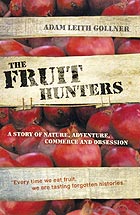
Ripe pickings ... tropical fruit. Photograph: Stuart Westmorland/Corbis
Adam Leith Gollner's first book, The Fruit Hunters, grew out of a
"fruit epiphany" in Brazil that sent him round the world in search of
exotic, fun, delicious and disgusting harvests, and back into history,
where fruit have propped up dictatorships and sent countries to war. The
book won the Canadian McAuslan First Book award and was a finalist for
the Mavis Gallant prize.
 "Fruit were made for storytelling. Dripping with hidden
significance, they provide an ideal rhetorical device. They seem so
sweet and pure, yet beneath their tempting exteriors fruit can be as
deceitful – and complex – as the knowledge of good and evil. Red hearts
or black eyes, capsules of sunlight or crystal drops of blood, fruit are
a mystery tool in the crafting of creative acts. The following literary
fruit scenes shed light on the ways this ripe symbolism can seduce
writers – and their subjects."
"Fruit were made for storytelling. Dripping with hidden
significance, they provide an ideal rhetorical device. They seem so
sweet and pure, yet beneath their tempting exteriors fruit can be as
deceitful – and complex – as the knowledge of good and evil. Red hearts
or black eyes, capsules of sunlight or crystal drops of blood, fruit are
a mystery tool in the crafting of creative acts. The following literary
fruit scenes shed light on the ways this ripe symbolism can seduce
writers – and their subjects."
Fruits and forbidden carnality go way back, an association Nabokov exploits giddily in this climactic scene. It's a Sunday morning in June. Lolita is wearing bobbysocks and a pink cotton dress. Humbert wakes, puts on his purple silk dressing down, and goes downstairs in search of Lo. He finds her pawing a Red Delicious apple, and slithers next to her on the candy-striped davenport. Sprawling herself athwart Humbert, the tanned nymphet devours her immemorial fruit, arousing "a hidden tumor of unspeakable passion". Humbert cannot contain his surreptitious euphoria: "I entered a plane of being where nothing mattered, save the infusion of joy brewed within my body."
Fruits have been a way of talking about sacred mysteries since the earliest buddings of narrative. Take the metaphysically charged plant life in the Garden of Eden. The tree of life's fruit apparently bestow immortality; the other tree is even thornier. Note to any original sinners out there: the Bible never stipulates that Adam and Eve ate an apple. Its actual name is "the fruit of the tree of knowledge of good and evil" – sufficiently convoluted to demand contemplation. Beyond the lust and shame, the allegory hints at a distinction between the material, physical world and another realm beyond duality.
In myths and religious texts, fruit are symbols that guide us across the threshold, whether it's an Edenic tree of never-ending youth or Buddha attaining enlightenment beneath a fig tree. Perhaps fruit are used to represent the unfathomable unity of opposites because they themselves are the coming together of male and female flowers, of sugars and acids, of dying flesh and unborn seeds. Shrouded in diaphanous notions of eternity and omniscience, the fruit of Genesis can be interpreted in a variety of ways, yet their ultimate meaning remains elusive. Our eyes will be opened, but the knowledge gained may not set us free. Quite the opposite …
The fruit trees are an awakening: the discovery of metaphor, the realisation of self, the echolocation of other worlds within this one. For Ackerman, this fruit epiphany led to a life of letters. As she gaped in youthful wonder at the living plum-bats nesting in their twisting limbs, her friends tried to pull her along to school. They asked what she was staring at. When she told them, they recoiled. "The possibility of bats didn't frighten them. I frightened them."
Fruit as existential crisis. This radio advertisement precipitates the suicide of Aimee Thanatogenos, the triangulated loved one in Waugh's California tragicomedy. Aimee, a cosmetic mortician, is overwhelmed by the futility of modern life. Spurning the advances of a Dennis Barlow, a young poet admirer, she has agreed to marry the dour embalmer Mr Joyboy, an Oedipal wreck in thrall to his mother. As empty as a Kaiser's Stoneless Peach, Aimee kills herself. Waugh's cynical notion of a stoneless peach's putative perfection also foreshadowed the empty promises of today's fruit marketing – from unripe, puckeringly bitter cranberries sold as "all natural, fully ripened, white cranberries" to apples dunked in artificial-grape-flavored bird repellent and branded as "Grapples."
Shakespeare pointed out that ripeness is all. He also noted how goodly-looking fruit often taste terrible. Today, many commercial fruit have immaculate exteriors. They've been doused with pesticides, ripening gases, dyes, biochemical growth inhibitors, hormone-based retardants and high-sheen waxes. Oil is used at every step: to power tractors and mechanised farming devices, to make petrochemical fertilizers, to manufacture the plastic PolyEthylene bags we carry groceries home in, and to transport fruit from orchards and warehouses to supermarkets. Accordingly, our produce departments look like new car lots full of enormous, perfect fruit gleaming with wax. The spectrum of colors is heightened by megawatts of directional lighting accentuating the beads of mist dripping from the temperature-controlled display cases. Unfortunately, most of these vehicles are lemons. But that doesn't mean there aren't goodly tasting fruit to be plucked. As the immortal bard might've put it, "There are more fruit in heaven and earth, Horatio, than are dreamt of in your philosophy."
French explorer Rene Caillié was the first European to penetrate the fearsome city of Timbuctoo – and return alive. Disguised as a mendicant from Mecca, his 1827 pilgrimage took him from the coast of Sierra Leone across the Sahara desert. Throughout this supposedly barren "Land of Death," Caillié was continually astonished by the diversity of fruit he encountered. Writer Galbraith Welch set out to retrace his journey in 1934. As she traverses a thousand miles of unbroken sand, her fantastical descriptions melt into mirages. There are trees like castles aflame, flowers of a thousand colours, scorpions like two-pound lobsters, ants as large as cats trained to collect gold for their masters, and myriad magical African fruit, like the cobaï: "no bigger than a hazelnut but so delicious that natives say that whilst it is in season no one would wish to touch any other food".
From the seventh to the 10th century, China's T'ang dynasty had a thing for fruit. Schafer's 1963 bestiary inventories countless exotics imported by the nobility. Of all their luxurious comestibles, none were as sought-after as the peaches of Samarkand. With a golden lustre, they were the size of goose-eggs and gushed nectar. Other rare fruit were shipped cross-country. Snow-packed watermelons were trundled into the capital from the oasis of Khwãrizm. Mare-nipple grapes arrived by camel from the Mountains of Heaven. Almost as tantalising as golden peaches were imperial lychees. At a time when women stained their lips with cherry juice and painted their eyebrows green to resemble moth antennae, none could outstyle the Emperor's precious consort, Yang Guifei, a concubine who had 700 personal tailors and kept a miniature jade fish in her mouth. To please her, Emperor Hsüan Tsung employed a special horse-riding courier to fetch her lychees in the south. This fruit cowboy would race across the length of China, from Lingnan to the palace at Ch'Ang-An, bearing his royal consignment. A non-locavore love story.
When Joseph Mitchell wrote the introduction to his collected works in 1992, he was at the tail-end of a three-decade-long writer's block. He'd been unable to write anything significant since his 1964 masterpiece, Joe Gould's Secret, the true story of a bohemian vagrant struggling to complete his nine-million-word Oral History of Our Time. Mitchell's introduction, composed shortly before his death, is a meditation on the remote, mysterious influences responsible for one's cast of mind. Describing his frequent visits to cemeteries as a child, Mitchell recalled how his family used to eat watermelons behind an old country church in North Carolina. They would then walk through the cemetery in a procession as Aunt Annie told horrifying – and horrifyingly funny – tales of the corpses below. This coming together of sweetness and tombs, of laughter and disintegration, presaged the graveyard humour typical of Mitchell's best writing.
According to the 19th century German mystic Jakob Lorber, who wrote at length about the fruit of outer space, the ubra fruit described above grows on Saturn's 180 foot-tall branchless glass trees. Their square trunks of green glass shine like mirrors, allowing passers-by to check out their reflections. As the fruit reaches maturity, the translucent water takes on the aspect of mercury. Once the silvery liquid solidifies, the balloon-shaped fruit fall to the ground and are cut into shiny squares used as plates by locals. Lorber learned about these fruit through "a series of protracted revelations," as Jorge Luis Borges described it. Starting in 1840, the voice of God commanded Lorber to put pen to paper and transcribe everything he heard. From that moment on, until he died 24 years later, he wrote all day almost every day, completing 25 volumes of more than 500 pages each (not including his minor works).
So many writers have been captivated by fruit that you could spend a lifetime simply attempting to catalogue them all. That's precisely what Robert Palter did: His hefty 850-page page anthology itemises and discusses countless fruit scenes in stories, poems, songs, films, and other literary vehicles. The research overwhelmed him early on: "Every time I'd find another instance of fruits in a story, I'd say 'Wow! I can't believe this!'" He decided to end the book with no punctuation, as a sign of its endlessness. Long after publication, he still couldn't stop finding fruit episodes. As he put it in a reminiscence entitled My Big Fruit Book: "Involuntarily, and even against my conscious intentions, I persist in scanning for fruit everything I encounter in the way of print and pictures." The pursuit of fruit becomes a quest for infinity.
1. Lolita by Vladimir Nabokov
"She had painted lips and was holding in her hollowed hands a beautiful, banal, Eden-red apple… She tossed it up into the sun-dusted air, and caught it – it made a polished plop. Humbert Humbert intercepted the apple…"Fruits and forbidden carnality go way back, an association Nabokov exploits giddily in this climactic scene. It's a Sunday morning in June. Lolita is wearing bobbysocks and a pink cotton dress. Humbert wakes, puts on his purple silk dressing down, and goes downstairs in search of Lo. He finds her pawing a Red Delicious apple, and slithers next to her on the candy-striped davenport. Sprawling herself athwart Humbert, the tanned nymphet devours her immemorial fruit, arousing "a hidden tumor of unspeakable passion". Humbert cannot contain his surreptitious euphoria: "I entered a plane of being where nothing mattered, save the infusion of joy brewed within my body."
2. The Book of Genesis
"She took of the fruit thereof, and did eat, and gave also unto her husband with her; and he did eat. And the eyes of them both were opened".Fruits have been a way of talking about sacred mysteries since the earliest buddings of narrative. Take the metaphysically charged plant life in the Garden of Eden. The tree of life's fruit apparently bestow immortality; the other tree is even thornier. Note to any original sinners out there: the Bible never stipulates that Adam and Eve ate an apple. Its actual name is "the fruit of the tree of knowledge of good and evil" – sufficiently convoluted to demand contemplation. Beyond the lust and shame, the allegory hints at a distinction between the material, physical world and another realm beyond duality.
In myths and religious texts, fruit are symbols that guide us across the threshold, whether it's an Edenic tree of never-ending youth or Buddha attaining enlightenment beneath a fig tree. Perhaps fruit are used to represent the unfathomable unity of opposites because they themselves are the coming together of male and female flowers, of sugars and acids, of dying flesh and unborn seeds. Shrouded in diaphanous notions of eternity and omniscience, the fruit of Genesis can be interpreted in a variety of ways, yet their ultimate meaning remains elusive. Our eyes will be opened, but the knowledge gained may not set us free. Quite the opposite …
3. The Moon By Whale Light by Diane Ackerman
"I didn't know I was different, truly, irrevocably different, different in what I saw when looking out of the window each day, until one morning when I was going through the orchard with three first grade school mates … Above us, the trees were thick with dark plums huddled like bats."The fruit trees are an awakening: the discovery of metaphor, the realisation of self, the echolocation of other worlds within this one. For Ackerman, this fruit epiphany led to a life of letters. As she gaped in youthful wonder at the living plum-bats nesting in their twisting limbs, her friends tried to pull her along to school. They asked what she was staring at. When she told them, they recoiled. "The possibility of bats didn't frighten them. I frightened them."
4. The Loved One by Evelyn Waugh
"This rendition comes to you by courtesy of Kaiser's Stoneless Peaches. Remember no other peach now marketed is perfect and completely stoneless. When you buy Kaiser's Stoneless Peach you are buying full weight of succulent peach flesh and nothing else."Fruit as existential crisis. This radio advertisement precipitates the suicide of Aimee Thanatogenos, the triangulated loved one in Waugh's California tragicomedy. Aimee, a cosmetic mortician, is overwhelmed by the futility of modern life. Spurning the advances of a Dennis Barlow, a young poet admirer, she has agreed to marry the dour embalmer Mr Joyboy, an Oedipal wreck in thrall to his mother. As empty as a Kaiser's Stoneless Peach, Aimee kills herself. Waugh's cynical notion of a stoneless peach's putative perfection also foreshadowed the empty promises of today's fruit marketing – from unripe, puckeringly bitter cranberries sold as "all natural, fully ripened, white cranberries" to apples dunked in artificial-grape-flavored bird repellent and branded as "Grapples."
5. The Merchant of Venice by Shakespeare
"A goodly apple rotten at the heart: O, what a goodly outside falsehood hath."Shakespeare pointed out that ripeness is all. He also noted how goodly-looking fruit often taste terrible. Today, many commercial fruit have immaculate exteriors. They've been doused with pesticides, ripening gases, dyes, biochemical growth inhibitors, hormone-based retardants and high-sheen waxes. Oil is used at every step: to power tractors and mechanised farming devices, to make petrochemical fertilizers, to manufacture the plastic PolyEthylene bags we carry groceries home in, and to transport fruit from orchards and warehouses to supermarkets. Accordingly, our produce departments look like new car lots full of enormous, perfect fruit gleaming with wax. The spectrum of colors is heightened by megawatts of directional lighting accentuating the beads of mist dripping from the temperature-controlled display cases. Unfortunately, most of these vehicles are lemons. But that doesn't mean there aren't goodly tasting fruit to be plucked. As the immortal bard might've put it, "There are more fruit in heaven and earth, Horatio, than are dreamt of in your philosophy."
6. The Unveiling of Timbuctoo by Galbraith Welch
"There were fruit trees with fruit that sang its way down dry throats like the gurgle of rippling brooks … strange native fruits, flaming with colour, bursting with juice. Nature on holiday, spending herself like a drunken sailor."French explorer Rene Caillié was the first European to penetrate the fearsome city of Timbuctoo – and return alive. Disguised as a mendicant from Mecca, his 1827 pilgrimage took him from the coast of Sierra Leone across the Sahara desert. Throughout this supposedly barren "Land of Death," Caillié was continually astonished by the diversity of fruit he encountered. Writer Galbraith Welch set out to retrace his journey in 1934. As she traverses a thousand miles of unbroken sand, her fantastical descriptions melt into mirages. There are trees like castles aflame, flowers of a thousand colours, scorpions like two-pound lobsters, ants as large as cats trained to collect gold for their masters, and myriad magical African fruit, like the cobaï: "no bigger than a hazelnut but so delicious that natives say that whilst it is in season no one would wish to touch any other food".
7. The Golden Peaches of Samarkand: A Study of T'ang Exotics by Edward H Schafer
"The golden peaches actually existed … what kind of fruit they may have been, and how they may have tasted, cannot now be guessed. They are made glamorous by mystery and symbolize all the exotic things longed for and the unknown things hoped for by the people of the T'ang empire."From the seventh to the 10th century, China's T'ang dynasty had a thing for fruit. Schafer's 1963 bestiary inventories countless exotics imported by the nobility. Of all their luxurious comestibles, none were as sought-after as the peaches of Samarkand. With a golden lustre, they were the size of goose-eggs and gushed nectar. Other rare fruit were shipped cross-country. Snow-packed watermelons were trundled into the capital from the oasis of Khwãrizm. Mare-nipple grapes arrived by camel from the Mountains of Heaven. Almost as tantalising as golden peaches were imperial lychees. At a time when women stained their lips with cherry juice and painted their eyebrows green to resemble moth antennae, none could outstyle the Emperor's precious consort, Yang Guifei, a concubine who had 700 personal tailors and kept a miniature jade fish in her mouth. To please her, Emperor Hsüan Tsung employed a special horse-riding courier to fetch her lychees in the south. This fruit cowboy would race across the length of China, from Lingnan to the palace at Ch'Ang-An, bearing his royal consignment. A non-locavore love story.
8. Introduction to Up in the Old Hotel by Joseph Mitchell
"The melons had been picked early that morning in our own gardens – long, heavy, green-striped Georgia Rattlesnakes and big, round, heavy Cuban Queens so green they were almost black."When Joseph Mitchell wrote the introduction to his collected works in 1992, he was at the tail-end of a three-decade-long writer's block. He'd been unable to write anything significant since his 1964 masterpiece, Joe Gould's Secret, the true story of a bohemian vagrant struggling to complete his nine-million-word Oral History of Our Time. Mitchell's introduction, composed shortly before his death, is a meditation on the remote, mysterious influences responsible for one's cast of mind. Describing his frequent visits to cemeteries as a child, Mitchell recalled how his family used to eat watermelons behind an old country church in North Carolina. They would then walk through the cemetery in a procession as Aunt Annie told horrifying – and horrifyingly funny – tales of the corpses below. This coming together of sweetness and tombs, of laughter and disintegration, presaged the graveyard humour typical of Mitchell's best writing.
9. Saturn by Jakob Lorber
"… a very particular kind of fruit begins to grow on a crystalline knobby stem. In the beginning this fruit consists of nothing but a translucent water pouch, which gradually becomes larger and larger. When this fruit ripens, it resembles a balloon which is six to nine feet in diameter."According to the 19th century German mystic Jakob Lorber, who wrote at length about the fruit of outer space, the ubra fruit described above grows on Saturn's 180 foot-tall branchless glass trees. Their square trunks of green glass shine like mirrors, allowing passers-by to check out their reflections. As the fruit reaches maturity, the translucent water takes on the aspect of mercury. Once the silvery liquid solidifies, the balloon-shaped fruit fall to the ground and are cut into shiny squares used as plates by locals. Lorber learned about these fruit through "a series of protracted revelations," as Jorge Luis Borges described it. Starting in 1840, the voice of God commanded Lorber to put pen to paper and transcribe everything he heard. From that moment on, until he died 24 years later, he wrote all day almost every day, completing 25 volumes of more than 500 pages each (not including his minor works).
10. The Duchess of Malfi's Apricots and Other Literary Fruits by Robert Palter
"I have come to realise that my project is inherently open–ended… My study is ongoing, and this book represents in a way only an 'interim report'."So many writers have been captivated by fruit that you could spend a lifetime simply attempting to catalogue them all. That's precisely what Robert Palter did: His hefty 850-page page anthology itemises and discusses countless fruit scenes in stories, poems, songs, films, and other literary vehicles. The research overwhelmed him early on: "Every time I'd find another instance of fruits in a story, I'd say 'Wow! I can't believe this!'" He decided to end the book with no punctuation, as a sign of its endlessness. Long after publication, he still couldn't stop finding fruit episodes. As he put it in a reminiscence entitled My Big Fruit Book: "Involuntarily, and even against my conscious intentions, I persist in scanning for fruit everything I encounter in the way of print and pictures." The pursuit of fruit becomes a quest for infinity.
Best Piece of Fruit
Ten of the best pieces of fruit | Stage | The Guardian

The Duchess of Malfi by John Webster
The
Duchess has secretly married her steward, but her pregnancy is revealed by her
irresistible appetite for apricots. These are offered to her as a test by the
Machiavellian Bosola, who knows that pregnant women cannot resist them. She is
duly allured, gorges herself, and vomits. The game is up.
Paradise Lost by John Milton
The
naughty apple is a special temptation because, before the Fall, Adam and Eve
appear to be fruitarians. Milton's poem contains some juicy-mouthed
descriptions of the luscious fruit in Eden, especially the "Nectarine
Fruits which the compliant boughs / Yielded them". "The savourie pulp
they chew, and in the rinde, / Still as they thirsted, scoop the brimming
stream". Yum.
"The Garden" by Andrew Marvell
Marvell
based his garden poems on the horticulture at Nun Appleton house in Yorkshire,
where he lived as a tutor. "The nectarine and curious peach / Into my
hands themselves do reach." The Yorkshire climate must have been different in his
day.
Emma by Jane Austen
Anyone
who has made themselves sick doing pick-your-own will recognise Mrs Elton's
experience at Mr Knightley's summer strawberry party. As she picks, she rants
about her favoured varieties, before the heat gets to her: "delicious
fruit — only too rich to be eaten much of — inferior to cherries — currants
more refreshing — only objection to gathering strawberries the stooping —
glaring sun — tired to death — could bear it no longer — must go and sit in the
shade".
"The Eve of St Agnes" by John Keats
If
you want to win your girl, do it with fruit. As Madeline sleeps, her would-be
lover Porphyro "from forth the closet brought a heap / Of candied apple,
quince, and plum, and gourd". "Manna and dates, in argosy transferr'd
/ From Fez" are piled on golden plates . No wonder he gets his way.
"Goblin Market" by Christina Rossetti
Luscious
fruit bring some strange sexual perdition in Rossetti's beautifully weird verse
fairy tale: "Crab-apples, dewberries ... / Dates and sharp bullaces, /
Rare pears and greengages, / Damsons and bilberries, / Taste them and
try". There are more varieties in the first paragraph of this poem than
anywhere in Eng. lit.
The Grapes of Wrath by John Steinbeck
No
accident that there are fruit in the very title of Steinbeck's chronicle of
depression America. The Okies flee the dustbowl for California, where they hope
for work picking fruit. There they can only survive by eating the fruit, and
make themselves sick. The land of plenty gives you gut rot.
Krapp's Last Tape by Samuel Beckett
Naturally,
Beckett's tormented old monologist seizes on that most absurd of fruit: the
banana. "He turns, advances to edge of stage, halts, strokes banana, peels
it, drops skin at his feet, puts end of banana in his mouth and remains
motionless, staring vacuously before him ... He treads on skin, slips, nearly
falls, recovers himself, stoops and peers at skin and finally pushes it, still
stooping, with his foot over the edge of the stage into pit."
Oranges Are Not the Only Fruit by Jeanette Winterson
Fruit
is variously symbolic in this auto-biographical novel. Everyone believes in God
and eats oranges. The narrator's mother shows barmy broad-mindedness by
collecting tinned pineapple for the town's "mission for coloured
people".
"Blackberrying" by Sylvia Plath
A
homely seasonal activity edges into psychosis. "Blackberries / Big as the
ball of my thumb, and dumb as eyes / Ebon in the hedges, fat / With blue-red
juices. These they squander on my fingers." Fresh fruit has never been like
this before.


Wat bloeit daar in het struikgewas?
Wat groeit hier zomaar?


Boterbloem
Heermoes
Maagdenpalm
Fluitekruid
Pinksterbloem
Robertskruid
Look Zonder Look
Daslook
Moeder en Zoon: wat bloeit daar?
(foto's Elisabet)
(wordt vervolgd...)
Tomatoloog
Voor onze tomatologen.

Tomaten telen zoals vroeger. - GroentenInfo. Helaas blijkt de link naar ‚de film’ niet meer te werken...
Creatief met PMD:
 Film over tomaten:


Tomaten telen zoals vroeger. - GroentenInfo. Helaas blijkt de link naar ‚de film’ niet meer te werken...
Creatief met PMD:
Worst
En ook dat bestaat:
5 Worst Vegetable Movies
http://joem18b.wordpress.com/2011/05/19/5-worst-vegetable-movies/
Posted on May 19, 2011 by joem18b
5. Children of the Corn (1984) – Teaches children to hate scarecrows and cornfields. That can’t be right. Also teaches children to hate children.
4. The Secret of the Grain (2007) – Teaches children that if they follow their dreams with respect to cous cous and mullet, [spoiler] they’ll flop and then die.
3. Super Size Me (2004) – Teaches children that they can live on McDonalds burgers for a month. Ok, plus some of the french fry vegetable.
2. La grande bouffe (1973) – Teaches children that it’s ok to try and eat themselves to death while hanging out with hookers. Nowhere does the movie advise children not to try this at home, or that meat will kill them faster than vegetables, particularly those vegetables in the root family.
1. Down Argentine Way (1940) – Carmen Miranda with fruits on her head. Teaches children that fruits are not to be taken seriously. This movie would be in the “Best Vegetable Movie” list if instead she had meat on her head.
On the “Best Vegetable Movie” side:
Mr. Majestyk (1974) – Teaches children that melons are macho.
5 Worst Vegetable Movies
http://joem18b.wordpress.com/2011/05/19/5-worst-vegetable-movies/
Posted on May 19, 2011 by joem18b
5. Children of the Corn (1984) – Teaches children to hate scarecrows and cornfields. That can’t be right. Also teaches children to hate children.
4. The Secret of the Grain (2007) – Teaches children that if they follow their dreams with respect to cous cous and mullet, [spoiler] they’ll flop and then die.
3. Super Size Me (2004) – Teaches children that they can live on McDonalds burgers for a month. Ok, plus some of the french fry vegetable.
2. La grande bouffe (1973) – Teaches children that it’s ok to try and eat themselves to death while hanging out with hookers. Nowhere does the movie advise children not to try this at home, or that meat will kill them faster than vegetables, particularly those vegetables in the root family.
1. Down Argentine Way (1940) – Carmen Miranda with fruits on her head. Teaches children that fruits are not to be taken seriously. This movie would be in the “Best Vegetable Movie” list if instead she had meat on her head.
On the “Best Vegetable Movie” side:
Mr. Majestyk (1974) – Teaches children that melons are macho.
Films met groenten
Tja:
Top 5 Vegetable Movies
But first, the rules:
- No movies about vegtables in the shape of phalli.
- No movies named in a spirit of unkinditude or bad taste, such as Talk to Her (2002).
- Herbs don’t count, ruling out that Argentinian movie about the guy who has a heart attack, retires, grows lavender, and, spoiler, has another heart attack.
- Movies about fruits are ok.
- I’m ruling out movies about gourds. It has to be a vegetable or fruit that you can eat.
- No Van Gogh movies on the basis of sunflowers and the fact that you can eat their seeds. This also rules out major-league baseball movies, where ballplayers eat lots of sunflower seeds these days, instead of chewing tobacco.
- No animated vegetables. This disqualifies It’s the Great Pumpkin, Charlie Brown (1966).
- No talking vegetables, including Dustin Hoffman as a tomato, regardless of his motivation. Hoffman, back before he moved into his 70s and has to take what Mick LaSalle calls twinkly parts.
- Sadly, cheese isn’t a vegetable.
- I haven’t seen Attack of the Killer Tomatoes (1978), but I’ll bet that if I had, it wouldn’t make my list. I have seen Children of the Corn (1984) (just the first of the many). It doesn’t make it either. And I haven’t seen King Corn (2007).
- No movies where a green alien is a vegetable, like in the original The Thing (1951). You’ve got to eat it; it can’t eat you. This rules out The Little Shop of Horrors (1960).
- No movies that just have vegetables or fruits in the title, like Fried Green Tomatoes (1991) and The Cocoanuts (1929).
- No movies about a big meal, of which there are too many to bother getting specific.
- Soup isn’t a vegetable.
- The vegtable can be cooked or raw.
- Please, no famines.
So, my list:
1. Mr. Majestyk (1974) – It’s about melons. Charles Bronson grows them and he has to break a few of the other kind in the course of the movie. Elmore Leonard wrote it; I hope that you’re enjoying Justifed. The great Al Lettieri is the bad guy in Majestyk; you may recall him from The Getaway (1972), doing his thang thang with Sally Struthers. Al Lettieri, dead at 47 from a heart attack… There was a time when Bronson was making some fine movies. The Mechanic (1972), though, not so much, because of the bummer ending and the fact that it made me hate Jan-Michael Vincent after seeing it.
2. The Secret of the Grain (2007) (Le graine et le mulet) – Old Algerian in Sète, France, wants to open a restaurant selling cous cous and mullet. Cous cous, being pasta, isn’t strictly a vegetable, but I’m giving it a pass. Great movie till it runs out of steam at the end.
3. The movie about the young German woman from Norway who immigrates to… Minnesota? Wisconsin? after the war and meets a guy. The two of them harvest a zillion acres of corn, barehanded, in a couple of days. Or maybe I misremember.
4. Lorenzo’s Oil (1992) – Tell me that the oil was made out of some vegetable or other. I wasn’t that crazy about the movie, but now I only need one more to be done.
5. Damn. I thought of one and now I’ve forgotten it… Hmm… Oh, yes. The one by a woman, long-time filmmaker, a documentary, about folks who go out after a harvest and scavenge from the fields. French. The somebodyorothers.
Top 5 Vegetable Movies
Posted on February 14, 2011 by joem18b
I don’t have five, or even one, vegetable movie in mind as I write this. I’m hoping that inspiration will strike as I go.But first, the rules:
- No movies about vegtables in the shape of phalli.
- No movies named in a spirit of unkinditude or bad taste, such as Talk to Her (2002).
- Herbs don’t count, ruling out that Argentinian movie about the guy who has a heart attack, retires, grows lavender, and, spoiler, has another heart attack.
- Movies about fruits are ok.
- I’m ruling out movies about gourds. It has to be a vegetable or fruit that you can eat.
- No Van Gogh movies on the basis of sunflowers and the fact that you can eat their seeds. This also rules out major-league baseball movies, where ballplayers eat lots of sunflower seeds these days, instead of chewing tobacco.
- No animated vegetables. This disqualifies It’s the Great Pumpkin, Charlie Brown (1966).
- No talking vegetables, including Dustin Hoffman as a tomato, regardless of his motivation. Hoffman, back before he moved into his 70s and has to take what Mick LaSalle calls twinkly parts.
- Sadly, cheese isn’t a vegetable.
- I haven’t seen Attack of the Killer Tomatoes (1978), but I’ll bet that if I had, it wouldn’t make my list. I have seen Children of the Corn (1984) (just the first of the many). It doesn’t make it either. And I haven’t seen King Corn (2007).
- No movies where a green alien is a vegetable, like in the original The Thing (1951). You’ve got to eat it; it can’t eat you. This rules out The Little Shop of Horrors (1960).
- No movies that just have vegetables or fruits in the title, like Fried Green Tomatoes (1991) and The Cocoanuts (1929).
- No movies about a big meal, of which there are too many to bother getting specific.
- Soup isn’t a vegetable.
- The vegtable can be cooked or raw.
- Please, no famines.
So, my list:
1. Mr. Majestyk (1974) – It’s about melons. Charles Bronson grows them and he has to break a few of the other kind in the course of the movie. Elmore Leonard wrote it; I hope that you’re enjoying Justifed. The great Al Lettieri is the bad guy in Majestyk; you may recall him from The Getaway (1972), doing his thang thang with Sally Struthers. Al Lettieri, dead at 47 from a heart attack… There was a time when Bronson was making some fine movies. The Mechanic (1972), though, not so much, because of the bummer ending and the fact that it made me hate Jan-Michael Vincent after seeing it.
2. The Secret of the Grain (2007) (Le graine et le mulet) – Old Algerian in Sète, France, wants to open a restaurant selling cous cous and mullet. Cous cous, being pasta, isn’t strictly a vegetable, but I’m giving it a pass. Great movie till it runs out of steam at the end.
3. The movie about the young German woman from Norway who immigrates to… Minnesota? Wisconsin? after the war and meets a guy. The two of them harvest a zillion acres of corn, barehanded, in a couple of days. Or maybe I misremember.
4. Lorenzo’s Oil (1992) – Tell me that the oil was made out of some vegetable or other. I wasn’t that crazy about the movie, but now I only need one more to be done.
5. Damn. I thought of one and now I’ve forgotten it… Hmm… Oh, yes. The one by a woman, long-time filmmaker, a documentary, about folks who go out after a harvest and scavenge from the fields. French. The somebodyorothers.


Volkstuintjes: De Maagd van Gent
De Maagd van Gent | Kinepolis België


“De Maagd van Gent” volgt het verhaal van verschillende Gentenaars die elk op hun beurt baat hebben bij het behoud van de ziel van Gent: de volkstuintjes. De hoofdrol is weggelegd voor een progressieve priester die, dankzij de groenten uit die volkstuintjes, dagelijks verse soep uitdeelt aan daklozen. Zijn missie dreigt abrupt te eindigen wanneer de burgemeester onder druk gezet wordt door de Franse winkelreus Colfour om de ‘ziel’ van Gent te verkopen…
Deze film is niet aangeraden voor kinderen jonger dan 6 jaar.
Guerilla Gardening
Wat is Guerrilla Gardening?

Guerilla Gardening:

Guerrilla gardening is een stedelijk fenomeen waarbij burgers op eigen houtje meer groen in de stad proberen te brengen. In praktijk gaat het vaak om het opfleuren van een verwaarloosd lapje grond met een groepje vrienden of gelijkgestemde zielen.
Zoek een vergeten stukje grond in de buurt.
Beslis wat je ermee wil doen en wat je nodig hebt.
Prik een datum (de lente is hiervoor zeer geschikt)
Nodig eventueel wat vrienden uit om je te helpen.
Neem foto's van je plant-actie en/of het resultaat en posten.
Guerilla Gardening:
De Wispelaere: moestuin
Paul De Wispelaere in Tussen Tuin en Wereld

„…. in de bittere door de zon verhitte geur ervan, links en rechts ziet hij de moestuin waar zijn grootmoeder, een blauw katoenen voorschoot voor haar donkere rokken gebonden, geknield het onkruid zit te wieden en de slakken van de jonge koolplanten plukt. En verder de rennen waar de kippen, scharrelend en met rukkende vleugels het koele zand doen opslaan in hun polken, en de kalkoenen heen en weer kuieren als de oude mannetjes in de tuin van het gesticht. De perziken worden zoet in de halfschaduw van hun langwerpige smalle bladeren, de kersen worden vanop hoge, verende ladders geplukt. Voor alles is er tijd, de handelingen en gebaren zijn langzaam en toegewijd, de dagen duren van de morgen tot de avond…."
Van Deyssel: liefde & tuin
Van Deyssel over de tuin in Een Liefde:
De sparren, in boschjes, in de achterhelft van den tuin, aan weêrszijde, doften, morden samen, zwart-van groenheid. Vlak achter het huis, waar kastanjes, langs de oprijlaan, hun pluimen van gedweëe, over elkaâr neêrvallende veêren verhieven, mengde zich een strook drooger, lichter groen tusschen de donkere sparren. De vloer van den tuin was van strepen gras en kleine grasvlakten, tusschen de zwarte zandpaden en de witte kiezelsteenen. En alom, den grond en van de ruimten uit, hoog en laag, zag Mathilde zich door een leven van groen omgeven, van goudgestraal doorschroeid of uitgelegen in den zacht-gelenden glans.
En verder:
Lodewijk van Deyssel waagde het als eerste om een personage expliciet de hand aan zichzelf te laten slaan, en nog wel een vrouwelijk personage ook. Zijn durf moet extra geprezen worden omdat hijzelf als jongetje voor het slapengaan door zijn vader een soort van dwangbuisje kreeg omgebonden dat de manuele stimulatie onmogelijk maakte. In zijn debuutroman Een liefde (1887) zit Mathilde, de vrouwelijke hoofdpersoon, in haar tuin te verlangen naar haar afwezige geliefde Jozef. Het duurt lang voordat je als lezer in de gaten hebt dat al die verhitte waarnemingen van bomen en struiken erotische fantasiezijn, maar dan gebeurt het: 'Haar beenen krompen samen omhoog, haar buik huiverde te-rug. Haar schrikkende handen grepen naar haar geslachtsdeel. Het slijm sapte uit haar openzijgenden mond, heete trillingen ijlden in haar achterhoofd, haar geslachtsdeel spoog zijn wellustvocht in het stijve stugge hemd.’(Herman Franke, Onaneren onder de palmboom - Archief - VK).

Van Deyssel: kooltjes
Lodewijk Van Deyssel:
Lodewijk van Deyssel en Arnold Ising jr., De briefwisseling tussen Lodewijk van Deyssel en Arnold Ising jr. (ed. H.G.M. Prick) · dbnl

Waarde Amice, ik heb geen tijd gehad dezen brief af te maken op den zelfden dag, die mij hem zag beginnen. Er is een maand over heengegaan. Al mijn gasten, waaronder ik ook, zoo als U misschien bekend zal zijn, onzen wederzijdschen amice F. van der Goes heb mogen tellen, zijn vertrokken. Ik ben weêr alleen met mijn vrouw, een meisje uit den kleinen burgerstand, maar die ik om haar groote lieftalligheid... Ik weet nog heel goed, waarop mijn brief van 7 Augustus had nêer moeten komen. Ik had U willen voeren door mijn moestuin en U daar dan, als ge al mijn vette ronde kooltjes zoudt zien staan, willen vragen, of gij niet dacht, dat ik nu zeer gelukkig was.
(...)
Ik zoû het ook wagen nu en dan eens fluisterend Uw aandacht te vestigen op Henri, 92 een Vlaamsche knecht, die ons in het huishouden en in den moestuin helpt, en wiens vlugheid en verstandigheid U wel voldoen zouden.
Lodewijk van Deyssel en Arnold Ising jr., De briefwisseling tussen Lodewijk van Deyssel en Arnold Ising jr. (ed. H.G.M. Prick) · dbnl
Abonneren op:
Reacties (Atom)